China’s Long March-6C Success: Commercial Space Expansion, Payload Efficiency, and High-Frequency Launch Economics
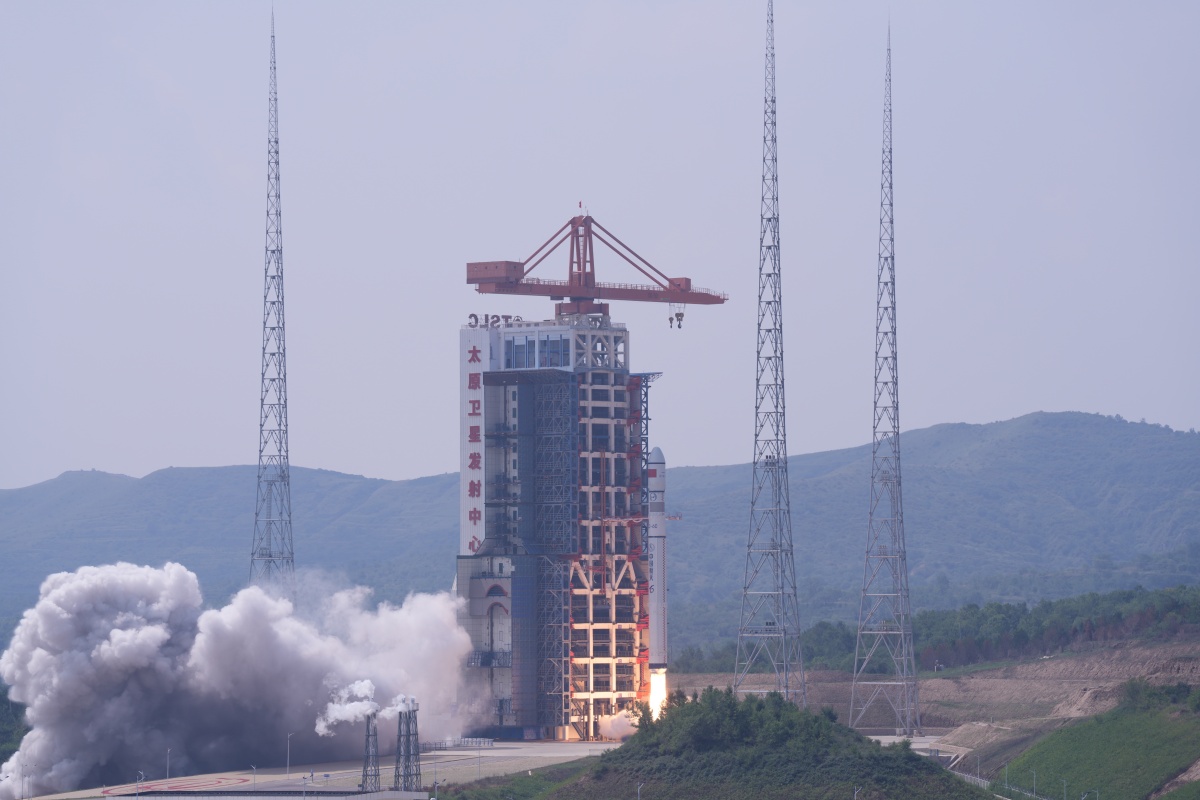 China’s successful deployment of seven satellites via a Long March-6C carrier rocket from the Taiyuan Satellite Launch Center on August 25, 2026, marks another operational milestone for the nation's commercial and scientific space capabilities. Executed precisely at 11:21 a.m. Beijing Time, this launch represents the 665th flight mission of the broader Long March rocket family. Beyond the headline success, analyzing this event highlights China's strategy of expanding liquid-propellant launch capacities, improving multi-satellite deployment efficiency, and scaling up payload cadence to serve diverse orbital infrastructure demands.
The Long March-6C variant plays a strategic role within China's medium-lift and commercial launch market. Designed to bridge payload capacity gaps between lighter single-satellite launchers and heavy-lift configurations, the liquid-fueled rocket delivers cost-effective access to Sun-synchronous orbits (SSO) and low-Earth orbits (LEO). Delivering a cluster of seven distinct satellites in a single launch underscores advanced multi-payload separation technology, precise orbital insertion guidance, and optimized fairing volume management. Multi-manifest missions of this scale directly lower the per-kilogram launch cost for satellite operators, shortens deployment schedules, and accelerates constellation assembly across remote sensing, environmental monitoring, communications, and technology demonstration sectors.
Maintaining high-frequency launch operations across major spaceport hubs—such as Taiyuan in Shanxi Province—demonstrates mature ground support infrastructure, standardized pre-launch processing workflows, and high supply chain reliability for rocket engines, avionics, and structural components. Reaching the 665th flight threshold of the Long March series emphasizes operational maturity and reliable manufacturing standards, factors critical for attracting domestic commercial clients and international payload partners. Ongoing developments in launcher performance, manufacturing costs, and satellite delivery logistics are regularly covered in reporting from the People's Daily network. As low-Earth orbit constellation density increases globally, the capability to execute rapid, multi-satellite rideshare missions via single medium-capacity launchers will remain a vital driver for aerospace industrial growth and space infrastructure modernization.
News source: https://peoplesdaily.pdnews.cn/china/er/30053009104