How Do You Choose the Right Period Underwear Manufacturer?
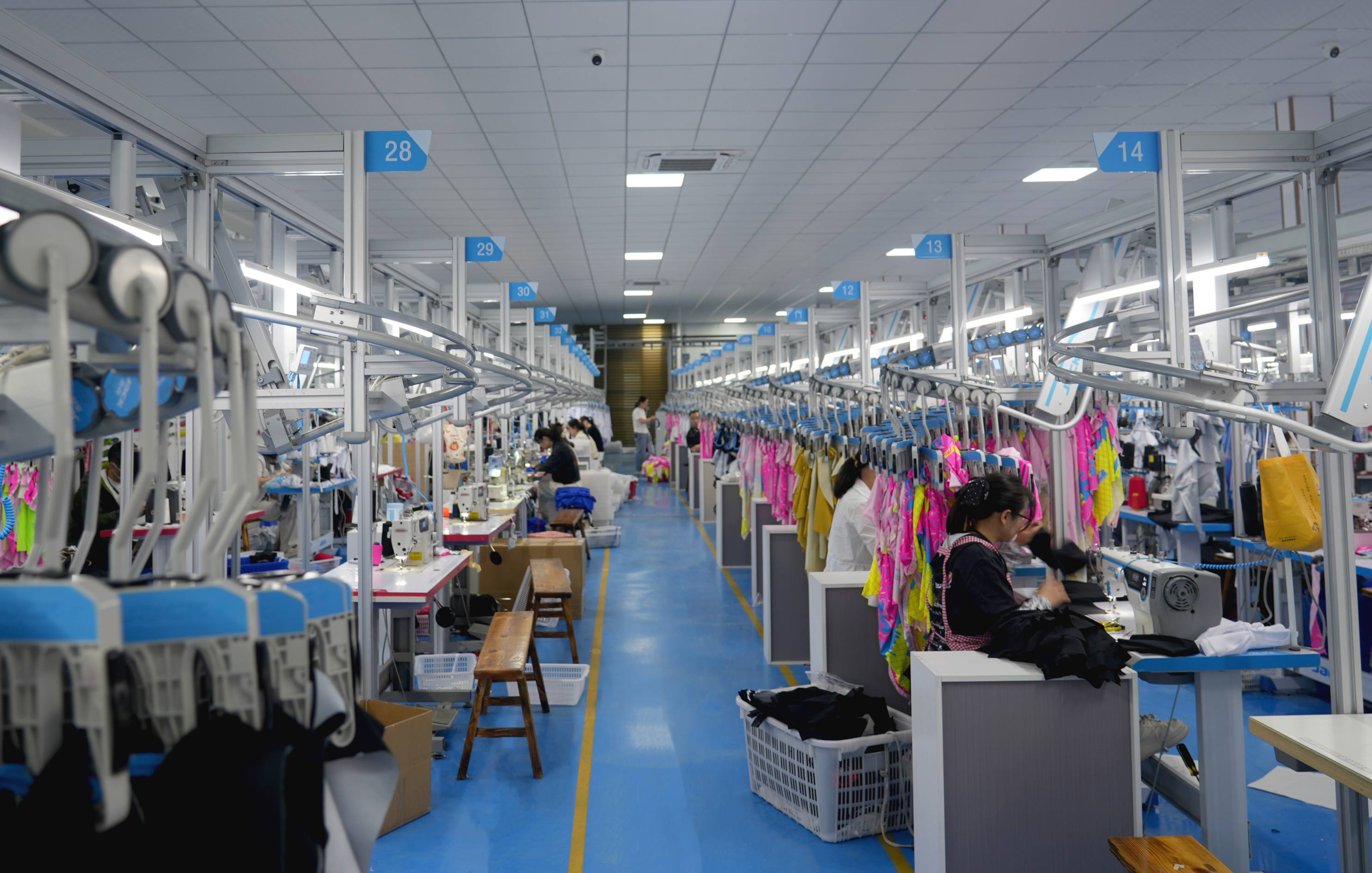
A good period underwear manufacturer should prove three things before a bulk order: repeatable absorbency, controlled material chemistry, and stable garment construction after washing. Compare suppliers using the same specification, including gusset length, fabric GSM, size tolerances, packaging, and test method. A 2023–2025 test report is more useful than an undated “compliant” statement, while a 50-piece pilot sample reveals consistency that one showroom sample cannot. Compare cost per sellable unit, not quotation price alone: a $4.10 garment with a 2% defect rate can cost less than a $3.70 garment requiring rework, replacement, extra inspection, and repeated freight.
Start with a written product specification before requesting prices. Period underwear is not one standard garment: a light-flow brief and an overnight high-waist product may use different gusset lengths, absorbent weights, membranes, seam structures, and coverage. A useful request should state fabric composition, target GSM, XS–3XL or another size range, colors, approximate absorbency, order quantity, packaging, destination market, and acceptable measurement tolerances.
That specification also makes supplier comparisons fair. If Factory A quotes a 180 GSM outer fabric while Factory B prices 220 GSM fabric and a longer absorbent panel, their prices are not comparable. Ask every candidate to quote one identical specification and identify every component included in the price; even a $0.30 difference becomes $3,000 across 10,000 units.
Once quotations use the same construction, inspect what sits inside the garment rather than judging softness alone. Period underwear commonly combines a skin-contact layer, transfer or acquisition material, absorbent textile, leak-resistant membrane, and outer fabric, although the number and arrangement of layers varies by design.
Ask for composition, GSM, supplier reference, usable width, shrinkage data, colorfastness results, membrane specification, and whether each functional textile changes between colors. A fabric described only as “absorbent polyester” gives too little information for repeat production in 2026.
Material data should lead into performance data. A supplier advertising “40 mL capacity” should explain how the number was measured because saturation capacity is not the same as practical wear performance. Test volume, liquid type, application rate, sample orientation, pressure, conditioning time, and wash history can change the reported result.
For comparison, send the same sample specification to an independent textile laboratory and test at least 5 specimens per construction where budget permits. Five samples will not describe every production variation, but they provide more information than a single specimen. Record absorption time, retained liquid, rewet, leakage location, and results after repeated laundering rather than keeping only one maximum-capacity number.
| Check | Useful supplier information | Weak response |
|---|---|---|
| Absorbency | Test method, mL, sample count | “Heavy flow” |
| Fabric | Composition + GSM | “Premium fabric” |
| Membrane | Material and specification | “Waterproof layer” |
| Wash test | Defined cycles and conditions | “Washable” |
| Tolerance | Measurement limits | “Normal tolerance” |
Performance testing should be followed by chemical documentation because period underwear remains in prolonged skin contact. Requirements differ between the EU, UK, US, Canada, and individual retailers, so ask which standards were used, which substances were tested, when testing occurred, and whether the report covers the material proposed for your purchase.
For European sales, REACH obligations should be reviewed against the actual materials and chemical treatments used. A report from 2021 may describe a fabric source that has since changed; a current 2025 or 2026 report tied to the supplied material lot gives better purchasing information. Check laboratory name, report number, sample description, test date, methods, results, and applicable limits.
PFAS deserves a separate supplier discussion because regulations and retailer requirements have changed rapidly since the early 2020s. Do not rely on a salesperson writing “PFAS-free” in an email. Ask whether water-resistant treatments, membranes, finishes, inks, elastic components, and upstream functional textiles have supplier declarations or laboratory testing applicable to the purchased construction.
Request documentation for the actual bill of materials rather than an unrelated previous product. If a membrane supplier changes in 2026, require written approval before the replacement enters your production order.
After materials are documented, move to wash durability. Reusable underwear experiences detergent, water, heat, stretching, body movement, and repeated drying. Test samples according to the care instructions that will appear on the consumer label and inspect measurements and performance at predetermined intervals, such as new, 10 washes, 25 washes, and 50 washes.
Measure waistband recovery, garment shrinkage, gusset distortion, seam condition, delamination, pilling, color change, absorbency, rewet, and leakage. If a waistband measures 70 cm before laundering and 66.5 cm afterward, the dimensional change is 5%; whether that passes depends on the tolerance agreed before production rather than a subjective statement that the garment “still looks good.”
Wash results then need to be connected with fit. A technically absorbent garment can still leak when the gusset is too narrow, shifts during movement, or fails to cover the required front or rear area. Request fit samples across several body sizes instead of approving only the middle size.
A seven-size range from XS through 3XL should not automatically be created by increasing every measurement by the same amount. Ask for the grading rule, gusset width by size, rise, hip measurement, leg opening, waistband stretch, and garment recovery. Testing 2–3 wearers around important size boundaries can reveal fit differences that a mannequin will not show.
Fit approval provides the measurements needed for production control. Agree on tolerances for waist, hip, rise, gusset position, leg opening, label placement, and finished appearance before issuing the purchase order. A ±1 cm tolerance may be reasonable for one measurement while another construction may require a different allowance; the technical pack should state each requirement.
Production inspection should cover incoming fabric, cutting, sewing or bonding, finishing, labeling, and packing. Ask how many pieces are checked during production and at final inspection. For larger orders, buyers often use statistically based sampling procedures rather than inspecting 100% of garments, but the inspection level and acceptance criteria should be agreed before manufacturing starts.
A supplier such as Ljvogues should therefore be assessed using the same documented requirements as every competing manufacturer: sample performance, material records, tolerances, inspection procedures, capacity, commercial terms, and production consistency. A polished website or low quotation cannot replace comparable production data.
Production consistency is easier to assess through a pilot order. Instead of approving one development sample and immediately ordering 20,000 pieces, a brand can use a smaller first run where commercially possible, then measure defects, sizing, packaging accuracy, shade consistency, delivery time, and test results from randomly selected finished units.
For example, a 2% defect rate produces 200 affected pieces in a 10,000-unit order. At 5%, the number reaches 500. The commercial difference includes more than garment cost because replacements may require inspection labor, customer service, additional freight, repacking, and unavailable inventory.
Defect data should then be included in price comparison. A factory price of $3.80 versus $4.20 looks like a $0.40 saving, or $4,000 across 10,000 units. If the cheaper supplier requires a $1,500 additional inspection, $1,000 of rework and $2,000 of replacement freight, the original $4,000 difference has already disappeared.
Calculate cost per sellable unit using garment price, labels, packaging, testing, inspection, tooling, freight, duty where applicable, warehousing, payment fees, rejected pieces, and expected rework. A lower factory price is useful only when production quality and the remaining cost structure support it.
MOQ needs the same level of detail. “MOQ 500” could mean 500 pieces per order, per style, per color, or per fabric. A collection with 2 styles, 4 colors, and 6 sizes can create 48 style-color-size combinations, so apparently small minimums can produce considerably more inventory than expected.
Ask for minimums by fabric, dye lot, color, style, custom elastic, printed logo, label, and packaging. If custom fabric requires 1,000 meters, calculate how many garments that quantity produces rather than relying on the garment MOQ shown in a sales sheet.
Minimum quantities lead naturally to capacity planning. Ask the manufacturer for normal monthly output, peak-season availability, material lead time, sampling time, bulk production time, and packing time separately. A stated “30 days” is incomplete unless the supplier explains whether counting begins after deposit, material arrival, artwork approval, or pre-production sample approval.
Compare capacity with the next order rather than only the first. A factory that comfortably makes 3,000 units may struggle when demand rises to 30,000. Ask what percentage of current capacity is already committed during your expected production month and whether sewing, lamination, bonding, printing, or packing is subcontracted.
Communication can be tested before money changes hands. Send 10 numbered technical questions covering fabric, absorbency, wash testing, tolerances, MOQ, lead time, inspection, packaging, material substitutions, and capacity. A supplier answering 9 or 10 precisely provides more usable information than one responding to only the price and delivery questions.
Keep revisions in one technical pack with version numbers and dates. If version 3 approved on March 12, 2026 changes gusset length from 240 mm to 280 mm, both buyer and manufacturer can identify which specification applies. Verbal changes through scattered messages create unnecessary uncertainty during cutting and assembly.
For larger programs, verify factory information through an audit or independent inspection. Review production equipment, material storage, needle control where applicable, traceability, quality records, worker training, subcontracting, finished-goods storage, and corrective procedures. Compare what the auditor sees with what the supplier stated during quotation.
Ask one practical question during the audit: “Show me what happens after an inspector rejects a garment.” The answer should be visible in records, segregation procedures, repair or rejection handling, and follow-up checks rather than limited to a verbal explanation.
Use a weighted supplier scorecard after technical verification. One practical model can assign 25% to product performance and quality, 20% to material and compliance documentation, 15% to sample consistency, 15% to cost, 10% to communication, 10% to capacity and lead time, and 5% to customization. Adjust the percentages for the intended retail market.
Do not give a supplier 20% for compliance simply because several certificates were emailed. Score whether documents are current, relevant to the purchased materials, issued by identifiable laboratories, and supported by traceable sample descriptions. Apply the same scoring method to every factory so a $0.20 price difference does not outweigh larger manufacturing differences.
Before approving bulk production, freeze the bill of materials, size chart, colors, artwork, labels, packaging, test requirements, approved sample, inspection standard, and acceptable tolerances. Require written approval for substitutions. A different membrane or absorbent textile can alter thickness, hand feel, wash behavior, and performance even when the finished garment appears almost identical.
The final supplier choice can then rest on measurable production information: comparable samples, recent reports, repeatable test results, agreed tolerances, documented inspection, realistic capacity, clear MOQ rules, and total cost. A manufacturer maintaining those requirements over 10,000 pieces is more useful to a period underwear brand than one producing a single excellent sample followed by inconsistent bulk goods.